
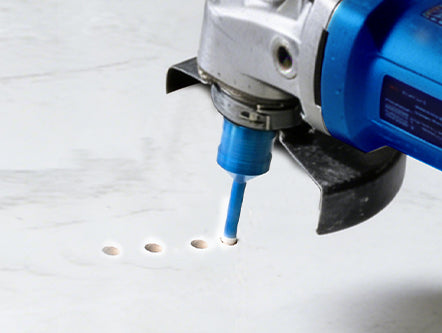
Working with ultra-hard materials like granite, marble, porcelain tiles, and reinforced concrete requires high-speed tools and diamond core bits. Because these operations generate intense friction, dust, and mechanical stress, maintaining proper safety protocols is essential to protect both the operator and the workpiece.
Here are 5 mandatory safety guidelines to follow whenever you operate diamond core drill bits.
1. Wear Essential Personal Protective Equipment (PPE)
High-speed drilling throws fine stone particles and mineral dust into the air. Equipping the proper gear before starting is your first line of defense.
• Eye Protection: Always wear ANSI-rated safety goggles or a full face shield to protect against flying chips and debris.
• Respiratory Protection: Use an N95 or P100 respirator mask when dry drilling to prevent inhaling toxic silica dust.
• Hand & Ear Protection: Heavy-duty work gloves protect hands from sharp tile edges, while earplugs or earmuffs safeguard against high-frequency grinder noise.
2. Ensure Secure Workpiece Clamping
Unsecured tiles or stone slabs can slip, spin out of control, or bind against the spinning bit, leading to sudden tool kickback or severe injury.
• Anchor Loose Materials: Never hold a loose tile in your hand while drilling. Always clamp it securely to a workbench with rubberized F-clamps.
• Provide Flat Support: Place a solid wood or cement backer board under the tile to reduce vibration and prevent the material from flexing and cracking under pressure.
3. Maintain Rigid Control During 45-Degree Entry
Starting a hole at an angle is the proper technique to establish a groove, but it also increases the risk of the tool walking or kicking back across the smooth glaze.
• Two-Handed Grip: Keep a firm, two-handed grip on your angle grinder or drill at all times.
• Controlled Contact: Ease the rim of the bit onto the surface gently until it bites into the stone. Avoid jerking or slapping the bit onto the tile face.
4. Manage Electrical Safety During Wet Drilling
Water is an excellent cooling agent, but combining water with power tools creates a major electrical hazard if not handled properly.
• Use GFCI Protection: Plug your power tools into a Ground Fault Circuit Interrupter (GFCI) outlet or use an inline GFCI cord assembly.
• Prevent Water Intrusion: Keep power cords and motor housing clear of slurry runoff, and angle the tool so water drips away from the air vents.
5. Inspect Equipment Prior to Use
Damaged or improperly mounted core bits can wobble, disintegrate, or fly apart under high RPMs.
• Check the Diamond Rim: Inspect the bit for cracks, missing diamond segments, or bent steel cores before threaded installation.
• Verify Thread Engagement: Ensure the M14 or 5/8"-11 thread is fully tightened onto the grinder spindle without cross-threading.
Safety Checklist & Hazard Prevention
| Hazard | Primary Cause | Prevention Strategy |
| Silica Dust Inhalation | Dry cutting without ventilation | Wear an N95/P100 mask or use water cooling |
| Tool Kickback / Slips | Starting flat or weak hand grip | Start entry at a 45° angle with a firm two-handed grip |
| Electrical Shock | Water contact with power tools | Always use a GFCI outlet for wet drilling applications |
| Eye Injuries | Flying stone fragments and chips | Wear impact-rated safety goggles or a face shield |