
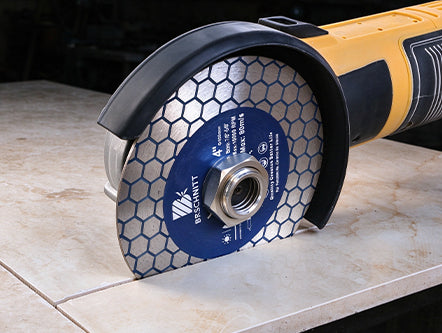
In stone fabrication, tile installation, and construction, diamond saw blades represent a significant ongoing expense. Contractors and DIY enthusiasts frequently face the same painful frustration: blades slowing down halfway through cutting quartzite or hard porcelain, heavy sparking, or edge chipping—wasting tool budget, damaging expensive materials, and delaying project timelines.
Up to 80% of premature blade failure is caused by thermal stress, improper RPM, or selecting the wrong bond hardness. By following these practical steps, you can eliminate tool waste and extend the working lifespan of your diamond saw blades by up to 50%.
1. Match the Metal Bond Hardness (Soft vs. Hard Bond)
The primary cause of premature wear or poor cutting speed is a mismatch between the metal bond matrix and the material being cut:
• Hard Materials (Granite, Quartzite, Hard Porcelain): Require a soft bond matrix. A soft bond allows worn diamonds to shed quickly, constantly exposing fresh, sharp diamond particles underneath.
• Abrasive Materials (Green Concrete, Asphalt, Sandstone): Require a hard bond matrix. A hard bond holds the diamonds tightly against high abrasion from aggressive slurry.
Rule of thumb: Opposites attract. Use a soft-bonded blade for hard materials, and a hard-bonded blade for soft, abrasive materials.
2. Control Heat to Prevent Segment Loss
Excessive heat breaks down the solder/brazing weld holding the diamond segments to the steel core, causing segment loss or core warping.
• Wet Cutting: Maintain a continuous, heavy water supply to both sides of the blade to flush out slurry and reduce friction. Never apply cold water to a hot blade, as thermal shock can crack the segment bond.
• Dry Cutting (The 10-and-5 Rule): Every 10 to 15 seconds of cutting, pull the blade out of the cut and let it free-spin in the air for 5 seconds to air-cool.
3. Let the Saw's Weight Drive the Cut (Avoid Excessive Pressure)
Forcing the blade creates severe heat and strips diamonds out of the matrix before they can complete their work.
• Let the saw’s natural weight handle the downward pressure.
• Keep your cuts straight. Twisting or pitching the blade inside the kerf deforms the steel core, leading to uneven segment wear or edge chipping on delicate tiles.
• Ensure your tool's operating RPM matches the recommended speed on the blade.
4. Restore "Glazed" Blades by Dressing
When cutting extremely hard, dense materials, metal bond matrix can smear over the diamonds, making the blade smooth and dull. This is called glazing.
Instead of discarding the blade:
1. Make 2 to 3 shallow passes through a highly abrasive material (such as an asphalt block, silica brick, or a concrete dressing stone).
2. The abrasive material strips away the outer layer of metal bond.
3. Fresh, razor-sharp diamond particles are exposed, restoring 100% cutting speed.
Key Takeaways for Long-Lasting Diamond Tool Performance
• Match Bond Hardness: Choose soft bonds for hard materials and hard bonds for abrasive materials to avoid glazing or rapid wear.
• Control Temperature: Ensure steady water flow for wet cuts, and practice the "10-and-5" cooling cycle for dry cuts.
• Dress Glazed Blades: Re-sharpen dull blades using an abrasive stone rather than replacing them prematurely.
• Maintain Straight Cuts: Let tool weight drive the cut to protect the steel core and prevent tile edge chipping.