
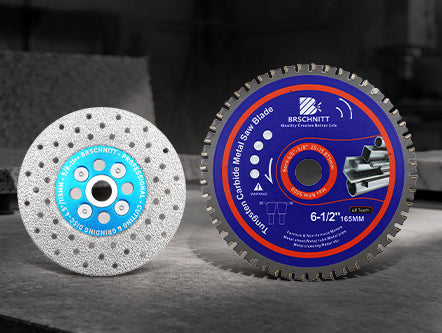
Einführung: Warum die Wahl des richtigen Sägeblatts wichtig ist
Ganz gleich, ob Sie Feinsteinzeug fliesen, Holzbretter zuschneiden oder Granitarbeitsplatten formen – die Verwendung des falschen Sägeblatts führt zu drei Hauptproblemen: Materialabsplitterung, schneller Verschleiß des Sägeblatts und Sicherheitsrisiken.
Eine der häufigsten Fragen von Handwerkern und Heimwerkern lautet: „Sollte ich ein Diamantsägeblatt oder ein Standardsägeblatt verwenden?“
Dieser Leitfaden erläutert die wesentlichen Unterschiede, die Materialverträglichkeit und die Auswahlregeln, damit Sie jedes Mal saubere, professionelle Schnitte erzielen.
1. Der entscheidende Unterschied: Schneiden vs. Schleifen
Das Verständnis der Funktionsweise der einzelnen Sägeblätter hilft, Materialschäden auf der Baustelle zu vermeiden:
• Standardsägeblätter (TCT / hartmetallbestückt): Diese Blätter arbeiten mit scharfen Metallzähnen, die das Material schneiden und scheren. Sie sind für weichere, biegsame oder faserige Materialien konzipiert.
• Diamantsägeblätter: Anstelle von Zähnen verfügen Diamantsägeblätter über synthetische Diamantpartikel, die in eine Metallmatrix entlang des Randes eingebettet sind. Sie schneiden nicht, sondern schleifen harte Materialien bei hoher Geschwindigkeit ab.
2. Wann man Standardsägeblätter verwendet
Standardsägeblätter, wie hartmetallbestückte (TCT) Blätter, sind ideal für das Hochgeschwindigkeitsschneiden von duktilen Materialien, bei denen die Zähne zubeißen können, ohne die Kanten zu zertrümmern.
• Beste Materialien: Hartholz, Weichholz, Sperrholz, PVC-Rohre, Kunststofffolien und weiche Metalle.
• Gelöstes häufiges Problem: Verhindert das Schmelzen von Kunststoffen und minimiert das Absplittern von Holz.
• Empfohlenes Werkzeug: Für kleine Zuschnitte und PVC-Schnitte liefert das BRSCHNITT TCT Kreissägeblatt schnelle, saubere Schnitte, ohne synthetische Materialien zu schmelzen.
3. Wann man Diamantsägeblätter verwendet
Bei der Arbeit mit dichten, spröden oder mineralbasierten Materialien führen Standardzähne sofort zu Absplitterungen an den Kanten. Diamantsägeblätter bewältigen extreme Härte und große Hitze.
• Beste Materialien: Feinsteinzeug, Keramikfliesen, Granit, Marmor, Quarz, Beton und Mauerwerk.
• Gelöstes häufiges Problem: Beseitigt das Abplatzen von Kanten bei empfindlichen Fliesen und hält intensiver Hitze beim Steinschneiden stand.
• Nass- vs. Trockenschnitt:
• Nassschnitt: Verlängert die Lebensdauer des Sägeblatts und bindet Staub (am besten für dicken Stein).
• Trockenschnitt: Praktisch für schnelle Schnitte auf Baustellen ohne Wasserquelle.
• Empfohlenes Werkzeug: Für splitterfreie Fliesenschnitte und zum beidseitigen Kantenschleifen ermöglicht das BRSCHNITT doppelseitige X-Mesh-Blatt Installateuren, Kanten in einem einzigen Durchgang zu schneiden und anzufasen.
4. Vergleichsleitfaden: Diamant- vs. Standardsägeblätter
| Merkmal | Standardsägeblätter (TCT) | Diamantsägeblätter |
| Schneidvorgang | Zahnschneiden / Scheren | Diamantkorndurchschliff |
| Geeignete Materialien | Holz, PVC, Kunststoff, Leichtmetalle | Feinsteinzeug, Keramik, Granit, Marmor |
| Hauptvorteil | Hohe Schnittgeschwindigkeit bei weichem Material | Splitterfreies Finish bei harten, spröden Materialien |
| Hauptrisiko bei Fehlgebrauch | Zertrümmert Fliesen / Überhitzt bei Stein | Schmilzt Kunststoff / Verstopft bei Weichholz |
| Top-Lösung | BRSCHNITT TCT-Blatt | BRSCHNITT X-Mesh Diamantblatt |
5. Häufig gestellte Fragen (FAQ)
F1: Kann ich ein Diamantsägeblatt zum Schneiden von Holz verwenden?
A: Nein. Holz ist faserig und weich; es verstopft die Diamantmatrix schnell (Glacierung), was zu extremer Hitze führt und das Holz verbrennt, ohne es effektiv zu schneiden. Verwenden Sie stattdessen ein TCT-Blatt.
F2: Wie verhindere ich das Absplittern von Feinsteinzeugfliesen beim Schneiden?
A: Verwenden Sie ein Diamantsägeblatt mit geschlossenem Rand oder X-Mesh-Design, das für den Nass-/Trockenschnitt von Fliesen ausgelegt ist. Üben Sie gleichmäßigen Druck aus, ohne die Säge zu forcieren, und stellen Sie sicher, dass der Blattrand sauber und frei von Ablagerungen ist.
Zusammenfassung & Empfehlung
• Verwenden Sie Standardsägeblätter für die Holzbearbeitung, das Kunststoffschneiden und allgemeine Bauzuschnitte.
• Verwenden Sie Diamantsägeblätter für die Fliesenverlegung, die Fertigung von Steinarbeitsplatten und Mauerwerksprojekte.
Bereit, Ihre Schnitteffizienz zu steigern? Entdecken Sie unsere vollständige Kollektion an leistungsstarken BRSCHNITT Sägeblättern, um das perfekte Blatt für Ihr nächstes Projekt zu finden.