
1. Introduction
• The Challenge: Drilling deep holes through thick concrete, masonry, or stone requires adding extension rods to your diamond core bits. However, extreme rotational torque and thermal expansion often lock the metal threads together, causing severe thread seizing (galling) that makes disassembly nearly impossible without damaging your tools.
• Why It Matters: Thread seizing ruins expensive core bits, damages adapter threads, causes job site downtime, and increases equipment replacement costs.
• Overview: This guide provides practical steps, tool selection advice, and maintenance tips to achieve deep-hole drilling smoothly while keeping your extension rods easy to detach.
2. Tip 1: Select the Right Extension Rod and Match Threads Accurately
• Match Thread Specifications Exactly: Force-fitting mismatched thread types (such as mixing metric M14 threads used in EU/AU markets with imperial 5/8"-11 threads used in North America) causes instant thread stripping and binding under high rotational speeds.
• Choose Heavy-Duty Steel Construction: Ensure your extension rods are machined from high-tensile steel to resist rotational twisting and deformation under heavy drilling pressure.
• Product Recommendation:
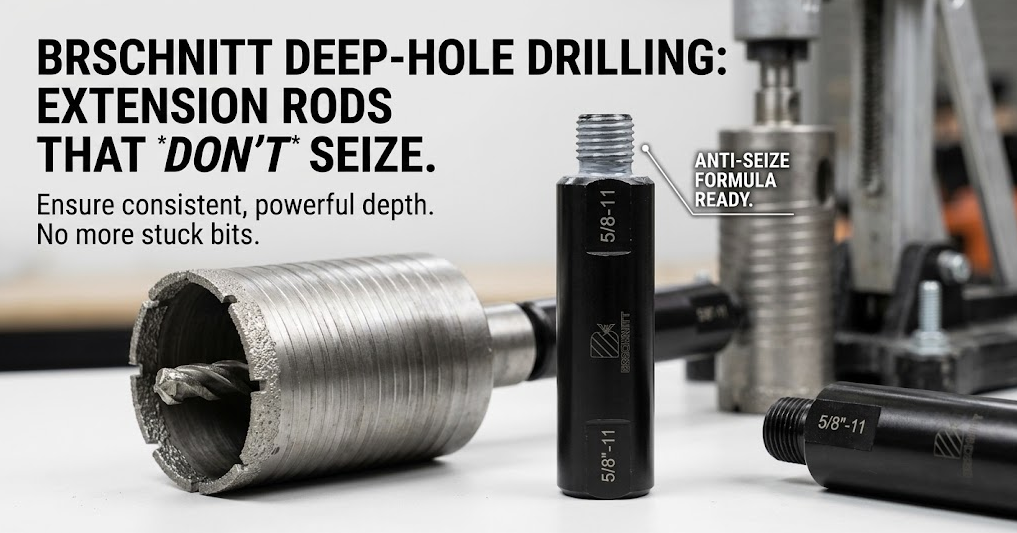
• For deep-hole core drilling with angle grinders or dedicated core drills, use the BRSCHNITT Diamond Core Drill Bit Extension M14 & 5/8"-11 Male to Female Thread. It features precision-machined threads and a heavy-duty steel body designed for seamless torque transfer without flexing.
3. Tip 2: Apply Anti-Seize Grease Before Assembly
• Why Threads Lock Up: High rotational friction creates micro-welds between male and female metal threads under stress.
• The Solution:
• Wipe both male and female threads clean of concrete slurry, grit, and dust before connecting them.
• Apply a thin, even layer of copper-based or nickel-based anti-seize lubricant (or heavy-duty marine grease) to the male threads.
• Screw the BRSCHNITT Extension Rod onto the core bit manually until hand-tight—do not over-tighten by force.
4. Tip 3: Use Anti-Seize Washers (Brass or Copper Rings)
• The Cushioning Effect: Placing a thin copper, brass, or high-density plastic washer between the shoulder of the extension rod and the core bit barrel creates a sacrificial buffer.
• Key Benefits:
• Prevents the metal shoulders from cold-welding together under high tightening torque.
• Allows you to break the connection tension easily with a standard wrench when unmounting the tool after drilling.
5. Tip 4: Control Drilling Pressure and Clear Debris Frequently
• Avoid Overheating and Binding: Forcing the drill creates immense heat and excessive torsional strain, expanding the metal threads tightly against each other.
• Best Practices:
• Use a steady, moderate feed pressure and let the diamond segments perform the cutting action naturally.
• Use a "peck drilling" technique (pulling the bit back periodically) to evacuate concrete dust and slurry from the deep hole. Accumulated dust increases friction drag and jams the extension shaft.
6. Tip 5: Follow Proper Post-Drilling Disassembly Techniques
• Never Use Excessive Impact Force: Striking seized threads with a steel hammer deforms the extension shaft and permanently locks the joint.
• Step-by-Step Removal Process:
• Allow the extension rod and core bit to cool down to ambient temperature before attempting disassembly.
• Position open-ended wrenches on the designated wrench flats of both the core bit and the BRSCHNITT Extension Rod.
• Apply smooth, opposite leverage. If the joint remains stubborn, spray penetrating oil directly into the thread junction and let it soak for a few minutes.
7. Key Takeaways & Comparison Table
| Factor | Recommended Action | Practice to Avoid |
| Extension Quality | Use precision-machined BRSCHNITT Extension Rods | Using low-grade or mismatched thread adapters |
| Thread Preparation | Apply copper anti-seize grease & copper washers | Assembling threads dry or covered in concrete slurry |
| Drilling Technique | Regular peck drilling to evacuate dust and slurry | Forcing the drill feed and overheating the joint |
| Disassembly Method | Dual wrenches on designated wrench flats | Hitting the shaft with a hammer to break threads |
8. Frequently Asked Questions (FAQ)
Q: Can I stack multiple extension rods together for extremely deep drilling?
A: Yes, but each additional joint increases potential runout (wobble) and adds another point of potential binding. Always ensure every individual connection is lubricated and fitted with a copper washer.
Q: What should I do if my diamond core bit extension is already stuck fast?
A: Apply penetrating oil generously to the thread joint, allow it to soak for 15 minutes, and use two long wrenches for maximum leverage. Gently applying heat to the outer female thread shoulder with a heat gun can also expand the outer metal slightly to help break the bond.